
KIOS Research and Innovation Center of Excellence (KIOS CoE), University of Cyprus
Description :
The KIOS Research and Innovation Center of Excellence (KIOS CoE) operates within the University of Cyprus. The Center was established in 2008 and was subsequently selected by the EU to advance into a Research and Innovation Center of Excellence in 2017, in collaboration with Imperial College London. The KIOS CoE is the largest research and innovation center in Cyprus and the region on Information and Communication Technologies (ICT) with an emphasis on monitoring, control, management and security of critical infrastructures. The goal of the Center is to conduct outstanding interdisciplinary research and innovation and produce new knowledge and tools that can be applied to solve real-life problems.
Role :
UCY will develop and apply probabilistic assessment tools to quantify the contribution of Long-Duration Energy Storage (LDES) to power system resilience under extreme operating conditions, with a particular focus on Dunkelflaute events. By combining advanced mathematical modelling with scenario-based simulations, UCY will evaluate the role of LDES in maintaining system stability, flexibility, continuity of supply, and mitigating cascading impacts during renewable energy droughts. It will further contribute to the application of these state-of-the-art techniques in the project pilot sites.
Team members
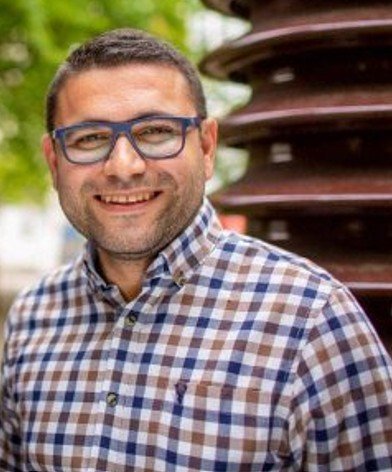
Mathaios Panteli
Associate Professor – My research area focuses on techno-economic reliability, resilience and flexibility assessment of future low-carbon energy systems, grid integration of renewable energy sources and integrated modelling and analysis of co-dependent critical infrastructures. My role in the project will be to coordinate the UCY activities towards achieving our goals and deliverables.

Balaji V Venkatasubramanian
Senior Research Associate – Balaji is currently a Senior Research Associate at the KIOS Research and Innovation Center of Excellence, specializing in power systems and resilience. His role will be the modeling of high impact low probability events, including Dunkelflaute events, and the development of techno-economic frameworks for quantifying the role and value of LDES in system resilience.