
Universidad Mayor de San Simón
Description :
The Universidad Mayor de San Simón (UMSS), founded on November 5, 1832, in Cochabamba, Bolivia, is one of the country's oldest and most prestigious institutions of higher education. As it approaches its 200th anniversary, UMSS stands as a leading center for education, research, and community engagement in the region.
The university comprises 14 academic units offering 57 undergraduate degree programs and more than 634 graduate diploma and master's programs, serving over 84,000 undergraduate students and nearly 10,000 graduate students. Its 69 research centers make significant contributions to science and technology.
The Centro Universitario de Investigación en Energía (CUIE) was established in response to the recognition that the energy sector is a strategic priority at the national level, crucial not only for economic development but also for improving the population's quality of life. CUIE's mission is to meet national and international demand for research, education, and outreach in order to advance the consolidation of sustainable energy alternatives. This work is also framed within the pursuit of the Sustainable Development Goals (SDGs) for 2030, with particular emphasis on SDG 7: Affordable and Clean Energy.
Role :
The CUIE will contribute its expertise in energy systems modelling and its deep knowledge of developing-country energy contexts to extend PowerMAX's reach beyond the Global North. As Bolivia's academic partner in the consortium, CUIE will help adapt the PyPSA-SMS++ modelling framework and the project's market simulation tool to the specific characteristics of the Bolivian grid.
Building on this modelling capacity, CUIE will develop a comprehensive energy transition pathway for Bolivia through 2040. This pathway will explore optimal storage portfolio design and transmission planning to support grid stability throughout the transition. It will help to develop business models and market design recommendations to reach economic feasibility for the Long Duration Energy Storage systems included in the transition plan.
Team members
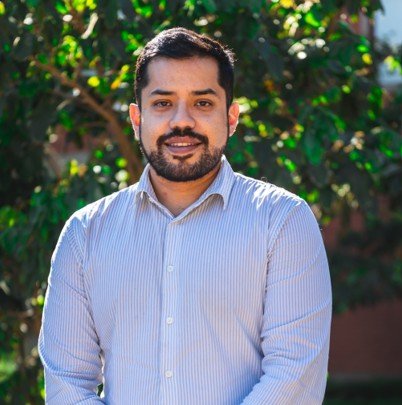
Sergio Balderrama
Head of the Centro Universitario de Investigaciones en Energías – Sergio Balderrama is a researcher at the Universidad Mayor de San Simón in Cochabamba, Bolivia. His main research interest is developing mathematical optimization and modeling techniques, which he applies to energy systems planning at both the national and rural community levels. He is currently part of the country’s first PhD program in energy, serving as a doctoral thesis supervisor and a member of the program’s academic council. He also co-supervises a PhD student at the University of Liège. Additionally, he is involved in the project « Tailored Energy System Models for Energy Planning in Bolivia, » funded by ARES and other Erasmus+ capacity-building projects. He maintains close collaboration with researchers from the Politecnico di Milano, the National Technical University of Norway, and the Royal Institute of Technology in Sweden. In PowerMax he will focus on the Bolivian replicator related task and the coordination of the project with other consortium members.
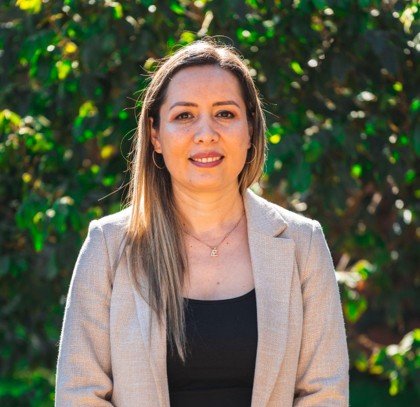
Evelyn Cardozo Rocabado
Researcher at the Centro Universitario de investigaciones en energias – Evelyn Cardozo currently works at the University Center for Energy Research as researcher. She coordinates the TESMEP (ARES funding) project at UMSS, as well as the Erasmus+ and the local PhD program in Energy (Sida-UMSS financed program). Her research focuses on energy technology, bioenergy, heat and power generation, and polygeneration. Evelyn has conducted life cycle assessments of biomass use for heat and power generation under various scenarios. Her current work centers on life cycle sustainability assessments and bioenergy potential models, in collaboration with doctoral students from the local PhD programs in Energy and the PRD ARES project. In PowerMax she will work on the PyPSA modelling tools and support the admistrative tasks .
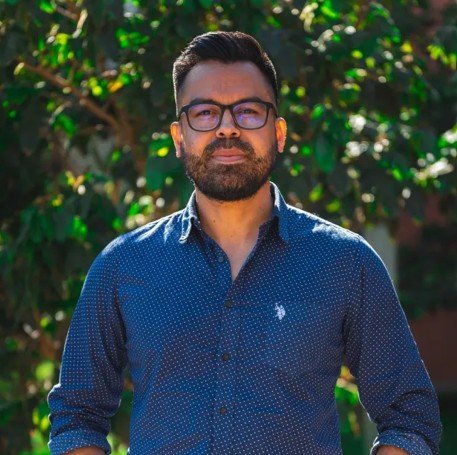
Johnny Villarroel
Researcher – Jhonny obtained his PhD from the KTH Royal Institute of Technology in Stockholm, Sweden. He is an electromechanical engineer who graduated from the Universidad Mayor de San Simón in Cochabamba, Bolivia. Prior to beginning his doctoral studies, he worked on rural electrification programs and for gas companies in Bolivia. His doctoral thesis was titled « Combined energy systems applied to productive sectors. » His scientific contributions focus on: polygeneration and applications of combined energy systems; energy performance analysis; techno-economic assessment; energy self-sufficiency; environmental analysis of combined energy solution applications (focusing on the impact of GHG emission reductions); and the promotion of waste-to-energy conversion within a circular economy framework, as well as the decentralization of energy systems and sustainability. His primary scientific interests include clean and sustainable energy technologies, decentralized/combined/hybrid energy solutions, the circular economy, and waste-to-energy conversion solutions. In powermax Johnny will coordinate with Bolivian stakeholders and bring his knowledge of energy modeling to the Bolivian replicator case.

Luis Choque
Researcher – Luis Antonio Choque Campero is a researcher at the University Center for Energy Research at the Universidad Mayor de San Simón in Cochabamba, Bolivia. His primary research interest lies in developing sustainable energy systems to improve access to electricity, heat, and clean water in rural communities. To this end, he employs thermodynamic models, mathematical optimization techniques, and computer simulations to analyze hybrid systems that integrate biomass, solar energy, energy storage, and polygeneration technologies. He completed his doctoral studies in collaboration with the KTH Royal Institute of Technology in Sweden, where he researched distributed generation systems based on biomass, Stirling engines, and membrane distillation for isolated communities in Bolivia. He is currently conducting postdoctoral research focused on the thermodynamic modeling—enhanced by artificial intelligence—of an axial-piston steam engine integrated with clean water production. He also participates in projects related to rural electrification, energy planning, energy storage, sustainable production systems, and energy monitoring. Furthermore, he engages in teaching and research activities in the fields of electrical machines, thermodynamics, renewable energy, and research ethics. He maintains close collaborations with researchers from the KTH Royal Institute of Technology, the Federal University of Rio de Janeiro, and other academic and international cooperation institutions. In powermax he will collaborate to develop the Bolivian replicator and the digital twins.
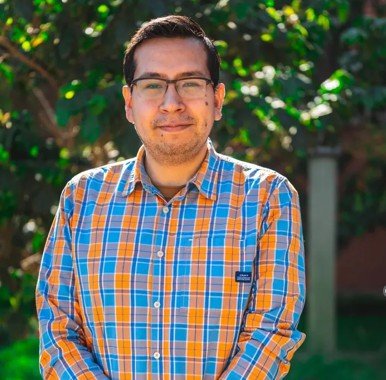
Pablo Jimenez
PhD student – Pablo Jimenez Zabalaga is a doctoral student at the University of Louvain-la-Neuve (UCLouvain) in Belgium, under a joint program with the Universidad Mayor de San Simón (UMSS) in Cochabamba, Bolivia. He holds a bachelor’s degree in Electromechanical Engineering and a Master of Science degree in Renewable Energy Technologies from UMSS, having participated in an exchange program with KTH Royal Institute of Technology in Sweden during his studies. His doctoral work—conducted as part of the iMMC-TFL (UCLouvain) and CUIE (UMSS) research groups—falls within the scope of the ARES cooperation project titled « Tailored energy system models for energy planning in Bolivia. » Aiming to achieve a sustainable long-term energy system for Bolivia, his research focuses on analyzing conversion technologies and the environmental impacts of various energy conversion pathways. He is currently developing an optimization model for the entire Bolivian energy system using the EnergyScope tool. His goal is to conduct an assessment that incorporates both techno-economic aspects and other sector-relevant factors through a multi-criteria analysis, while also including sectors often overlooked in national energy models, such as isolated systems and remote communities. In powermax he will contribute with energy modeling tasks at regional and market level.
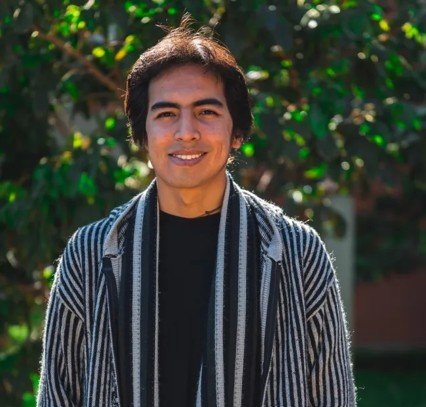
Carlos Fernandez
PhD student – Carlos Fernández is a doctoral student at the University of Liège (ULiege) in Belgium, under a joint program with the Universidad Mayor de San Simón (UMSS) in Cochabamba, Bolivia. He holds dual bachelor’s degrees—in Environmental Engineering from UCB and Industrial Engineering from UMSS—and a Master’s degree in Renewable Energy Science and Technology from UMSS; he also participated in an exchange program with KTH Royal Institute of Technology in Sweden. His doctoral work, conducted as part of the ISES (ULiege) and CUIE (UMSS) research groups, falls within the scope of the ARES cooperation project titled « Tailored energy system models for energy planning in Bolivia. » His research focuses on applying long-term planning models to developing countries and defining interconnection points between tools to foster synergies and complementarities through « soft-linking » strategies. He is currently developing a large-scale power system optimization model for Bolivia using the PyPSA-Earth tool. The aim of this model is to incorporate geospatial variables into planning studies, evaluate interconnection scenarios with neighboring countries, and compare the tool’s strengths and limitations against other energy optimization models. In powermax he will contribute with energy modeling tasks at regional and market lvl.