
Università di Pisa
Description :
The University of Pisa is one of the oldest universities in Italy, and its Department of Computer Science (DI) is the oldest one in Italy. The optimization group at the DI has multi-decade experience on the methodological development and (open-source) implementation of sophisticated solution algorithms for complex optimization problems, among which specifically in the energy systems setting thanks to the collaboration with researcher of the Department of Energy, Systems, Territory Constructions Engineering (DESTEC). The Power Systems group at DESTEC has experience in the systems technologies, including storage, and the optimal planning and dispatch of power and energy systems, including generation and storage technologies. Its researchers also maintain open-source tools for systems optimization.
Role :
The primary role of UniPI is to develop bespoke components of the SMS++ algorithmic framework, and their interface with the PyPSA modelling system, that allow all the partners to easily develop the complex optimization models necessary to perform the crucial case studies of the project. In order to do so, UniPI will be involved in all stages of the definition of the technical characteristics of the LDES systems, the energy system at large in which they will be included, and the markets in which the systems will operate, so as to build models that faithfully represent the expected operations of the systems. Since these models will be large- to huge-scale with several nested forms of structure (stochastic, temporal, geographical, …), specialized solution algorithms, e.g., based on nested decomposition, specialized interior-point techniques, and exact/heuristic discrete search will be developed or improved in order to allow the partners to solve the instances at the scale and granularity required by the project.
Team members
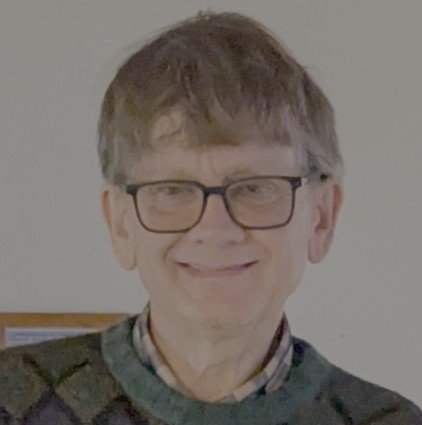
Antonio Frangioni
Tenure-Track Researcher at the Department of Computer Science – My main research interest is the analysis, development, implementation and testing of solution approaches for large-scale structured optimization problems at the interface between continuous and combinatorial optimization, with emphasis on (re)formulation techniques to expose and exploit valuable structural properties, and their real-life application in several fields (energy, transportation, telecommunications, …) I’m also interested in the numerical analysis, computer science, artificial intelligence and machine learning issues arising within these solution approaches and, vice-versa, in the use of mathematical programming techniques in these disciplines. Within the project, my main role will be to supervise and directly contribute to the implementation of the new modelling and algorithmic components of the SMS++ framework, keeping close tabs to the proposed optimization models in order to ensure that they remain realistically solvable within the capabilities of the solution approaches while properly representing the technical and operational realities of the modelled physical systems.
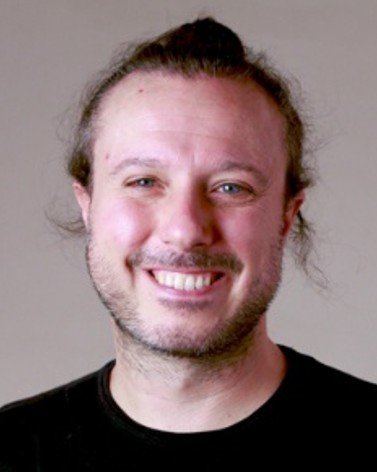
Stefano Novellani
Associate Professor at the Department of Computer Science – I conduct research in mathematical and combinatorial optimization, with a focus on developing exact, metaheuristic, and matheuristic algorithms for complex logistics and transportation problems. My main research interests include vehicle routing, pickup and delivery, last-mile delivery, parcel lockers, drone-assisted logistics and intralogistics, bike-sharing, and stochastic optimization. My methodological expertise centers on mixed-integer linear programming, branch-and-cut, branch-and-bound, column generation algorithms, stochastic programming, matheuristic and metaheuristics for solving large-scale optimization problems. I am also open to and interested in other types of optimization problems, especially those based on networks, as well as methodological approaches beyond my primary research focus, such as artificial intelligence, machine learning, and reinforcement learning. Within the project, my main role will be to contribute to the implementation of the new modelling and algorithmic components of the SMS++ framework.
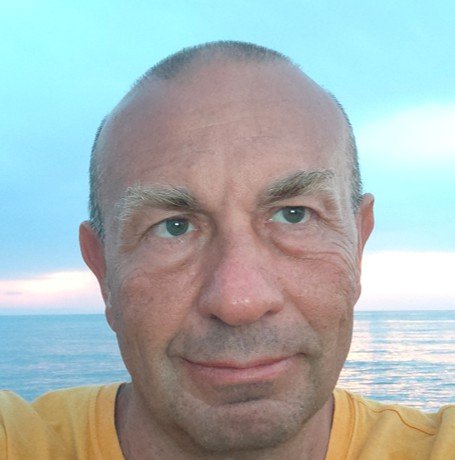
Giancarlo Bigi
Associate Professor at the Department of Computer Science – My main research interests lie in the desscription, theoretical analysis and algorithmic resolution of single and multi-agent decision-making problems through variational models at the interface between continuous optimization, variational analysis and game theory. The main focus of my research is on variational and Ky Fan inequalities, (generalized) Nash games, cooperative games, semi-infinite and bilevel optimization problems and the interplays between these mathematical models, together with their applications in several fields (such as economic and financial markets, production planning, traffic networks, energy systems). Within the project, my role will be to collaborate in devising appropriate models and computational techniques for the economic side of the management of energy systems and for evaluating the response and behaviour of the markets where these systems will operate and compete.
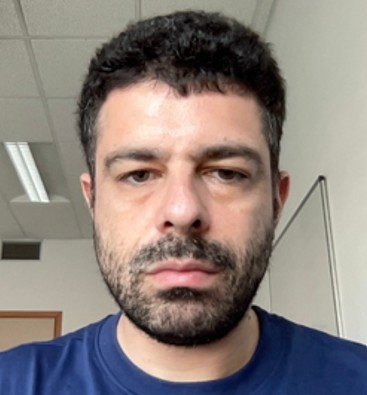
Luca Mencarelli
My favorite area of research is in general mixed integer nonlinear optimization (MINO) from both a theoretical and applicative/modeling viewpoint. I enjoy modeling real-world problems, especially complex, large-scale ones, and solving them using innovative algorithmic approaches. My research within the project will focus on integrating novel solving approaches for MINO problems in the SMS++ framework, for both heuristic aspects, trying to quickly obtain good-quality solutions to complex, large-scale, multi-period energetic problems, and exact procedures, to retrieve an optimal solution to these problems.
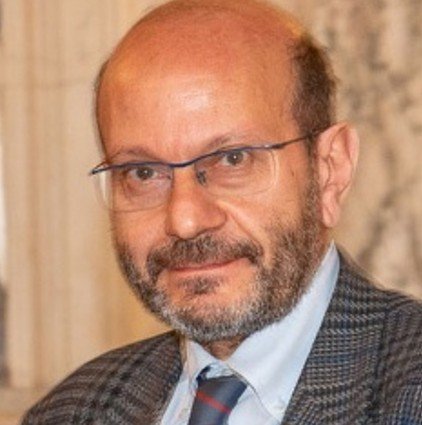
Massimo Ceraolo
After several years as a researcher at a private company, I became a university researcher at the University of Pisa. In 2000 he assumed the role of associate professor, and in 2002 full professor of Electric Power Systems at the University of Pisa. My main research topics, in recent years, concern: electrochemical energy storage systems, electric and hybrid systems, electrically driven guided transport systems. I am also active in defining specifications, creating and evaluating simulation and data analysis tools: I collaborate in the improvement of standard libraries created in the Modelica modeling language (www.modelica.org), and of the simulation system based on it OpenModelica (www.openmodelica.org).
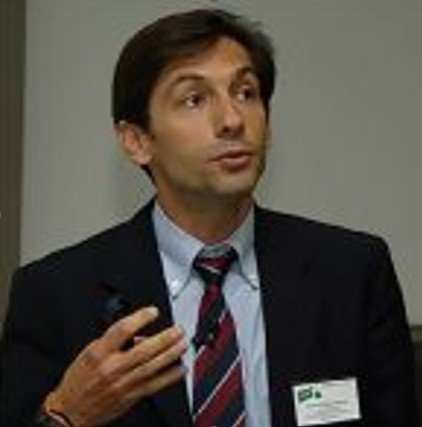
Stefano Barsali
Full Professor at the Department of Energy, Systems, Territory Constructions Engineering (DESTEC) – I earned my Master’s degree and PhD in Electrical Engineering from the University of Pisa in 1994 and 1998. I have worked there since 2000 and became Full Professor of Electric Power Systems in 2018, teaching power generation and system dynamics. I served as Secretary of CIGRÉ Study Committee C6 and received the CIGRÉ Technical Committee Award in 2010. From 2011 to 2018, I chaired the Master’s Degree Programme in Electrical Engineering and contributed to European and industry master’s programmes. My research covers power-system restoration, energy storage, hybrid vehicles, distributed generation, renewables, and power-plant flexibility.
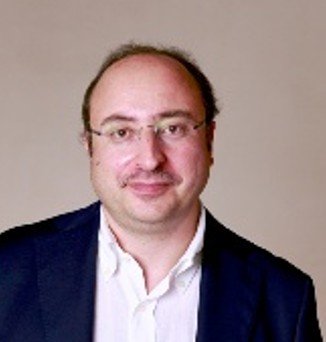
Giovanni Lutzemberger
Associate Professor at the Department of Energy, Systems, Territory Constructions Engineering (DESTEC) – I am Associate Professor at the University of Pisa, specializing in electric power systems, batteries, and electric, hybrid, and fuel-cell vehicle propulsion. I earned my PhD in 2011, qualified as a Full Professor in 2023, and have served as President of the Bachelor’s Degree in Energy Engineering since September 2023. My main research topics are: modelling and experimental activities on energy storage systems, simulation, design and testing on electric and hybrid systems, and analysis of feeding systems for electrified transportation systems, also with energy storage.
Claudio Scarpelli
Researcher Fellow (RTD-A) at the Department of Energy, Systems, Territory Constructions Engineering (DESTEC) – I earned my Master’s degree in Electrical Engineering in 2018 and my PhD from the University of Pisa in 2022, with a thesis on the modelling and experimental validation of battery energy storage systems. Since 2023, I am a fixed-term researcher at the University of Pisa, focusing on the electro-thermal modelling and ageing of lithium batteries and the energy modelling of electric and hybrid systems.
Davide Fioriti
Assistant Researcher at the Department of Energy, Systems, Territory Constructions Engineering (DESTEC) – I have over ten years of experience in renewable energy, storage, microgrids, energy communities, and rural electrification. I earned my PhD in 2019 and obtained the Italian National Scientific Qualification as Associate Professor in 2023. I have coordinated research projects, contributed to several European Horizon initiatives, and served as a visiting scientist at PIK and MIT . I am also co-founder of PyPSA meets Earth and I contribute to the development of open-source energy-modelling tools.